
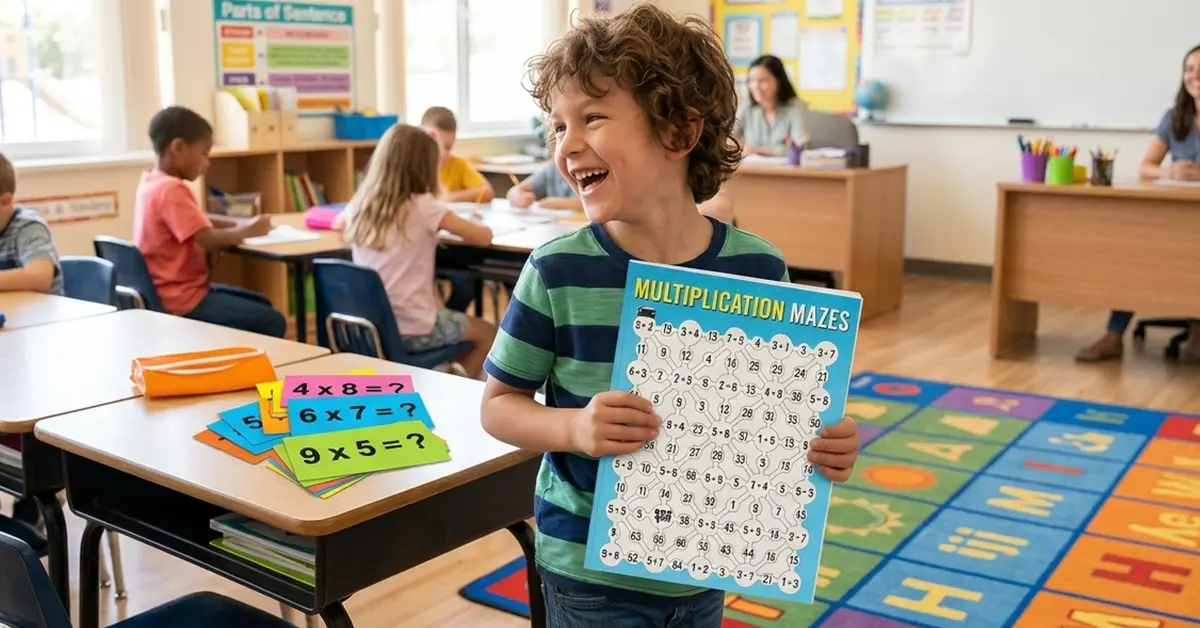
TL;DR: Helping kids memorize multiplication facts does not have to involve stressful flashcards or timed drills. This article explains how math mazes turn multiplication practice into an engaging game that reduces math anxiety, encourages self-correction, and improves fact fluency through active problem-solving. Parents and teachers will discover practical ways to use race car multiplication mazes at home or in the classroom to make learning times tables fun, screen-free, and effective for 3rd and 4th graders.
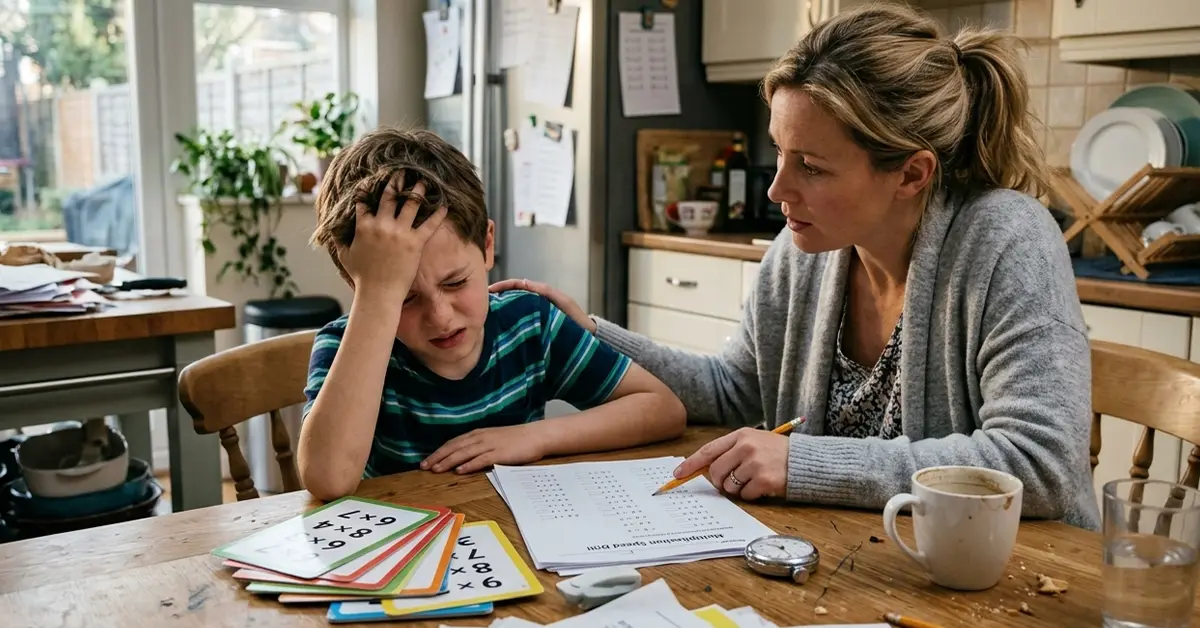
Picture this familiar evening scene. It is 6:30 PM, dinner is slowly getting cold on the stove, and you are sitting at the kitchen table. Spread out in front of you is a stack of bent, slightly tear-stained index cards.
Your child is staring blankly at the numbers “7 x 8.” You know they know it. They just practiced it ten minutes ago. But right now, their mind is completely blank.
The frustration is palpable. They are on the verge of a meltdown, and honestly? You are right there with them.
Look, we have all been there. Mastering the 0-9 times tables is a massive, daunting hurdle in early education. It is often the first time a child faces an academic wall that requires sheer recall, and the friction it causes between a parent and child—or a teacher and a frustrated student—is exhausting.
As a 3rd-grade teacher and a parent who has navigated these exact trenches, I understand the dread. We want our kids to feel confident. We want them to succeed. But the daily battle over homework is draining the joy out of learning.
The good news? It absolutely does not have to be this way.
There is a simple, highly effective shift you can make right now. We can move away from stressful, drill-and-kill routines and embrace gamified learning. If you are desperately wondering how to help a child memorize multiplication facts without the tears, you are in the right place. Let’s explore why swapping traditional methods for engaging math mazes might just save your sanity.
The Problem with Traditional Methodology
Let’s take a hard look at the traditional tools we have been told to use for decades. Flashcards. Timed worksheets. The infamous “Mad Minute.”
Hearing the phrase “timed test” probably makes your own palms sweat, even as an adult. We hand an eight-year-old a sheet of sixty problems, start a ticking timer, and expect them to perform. But here is what is actually happening beneath the surface.
The Science of Math Anxiety
When a child is put under immediate pressure to perform, their brain often perceives it as a threat. This triggers the release of cortisol, the body’s primary stress hormone.
Cortisol is great if you are running from a bear. It is terrible if you are trying to remember what 6 x 9 is.
When cortisol floods the system, it actively shuts down the brain’s prefrontal cortex. This is the area responsible for working memory and complex problem-solving. So, when your child freezes up looking at a flashcard, they are not being stubborn or lazy. Their brain has literally locked them out of their own memory bank.
Rote Memorization vs. True Engagement
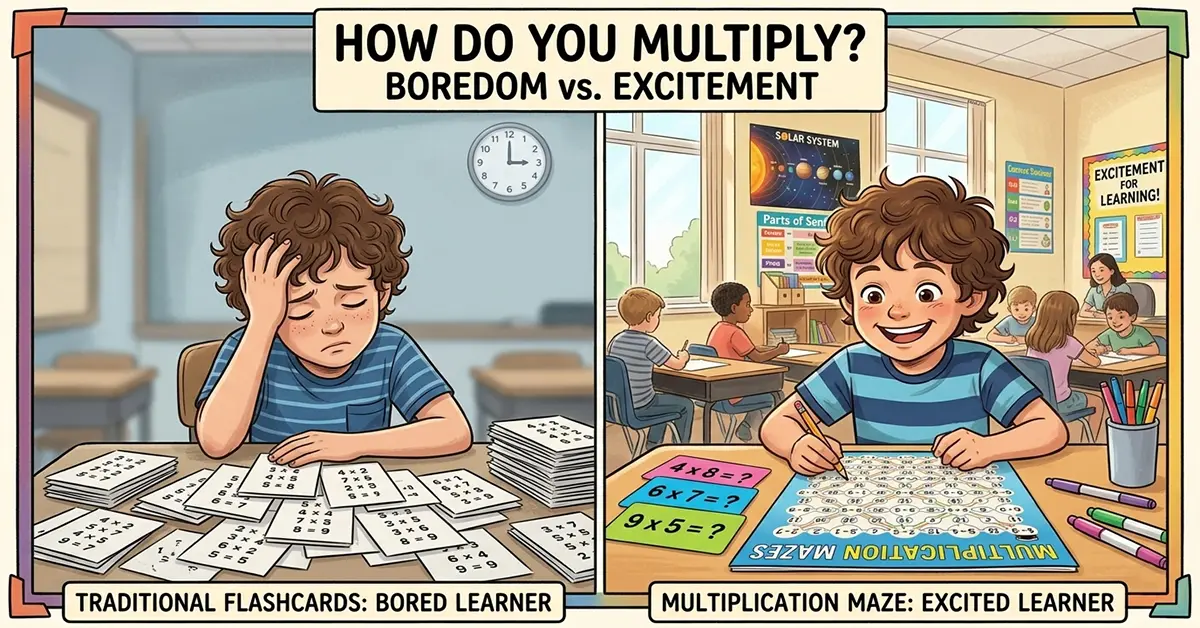
Traditional methods rely entirely on rote memorization. This means forcing a child to stare at a static piece of paper until the fact magically sticks in their brain.
For some kids, this works fine. But for visual learners, kinetic learners, or kids with ADHD, rote memorization is like trying to hold water in a sieve. It is a passive activity. There is no hook, no story, and no context for the brain to latch onto.
When a child only relies on rote recall without engagement, the knowledge is fragile. The second they feel stressed, the fragile connection breaks. They need a learning method that builds stronger, more resilient neural pathways. They need to actively use the math, not just stare at it.
Why Math Mazes Are a Game-Changer for Fact Fluency
If staring at flashcards is a passive, stressful activity, what is the alternative? Enter the math maze.
A math maze transforms a flat, boring equation into an interactive journey. Instead of just answering a question, the child is navigating a path. The math becomes a tool to solve a larger puzzle, rather than an isolated chore.
Let’s break down the science and psychology of why this specific format works so incredibly well for fact fluency.
Active Problem Solving vs. Passive Staring
When a child looks at a math maze, their brain immediately lights up differently than it does with a worksheet.
They are engaging in active pathfinding. This requires spatial reasoning and strategic thinking. To get from Point A to Point B, they have to calculate the math problems correctly. The multiplication fact is no longer just a boring chore; it is the key that unlocks the next step of the puzzle.
This multi-sensory engagement builds stronger cognitive pathways. The brain files the memory of “8 x 8 = 64” away much more securely because it was tied to an action (moving their pencil down the correct corridor) rather than just a passive glance at a card.
The Power of Self-Correction
This is perhaps the biggest breakthrough for parents and teachers.
Think about what happens when a child gets a worksheet problem wrong. They do not know it is wrong until an adult comes by with a red pen, marks an “X,” and tells them to do it again. This external correction feels like nagging. It chips away at their confidence and triggers defensiveness.
Now, think about a math maze. If a child calculates 7 x 6 incorrectly and follows the path for “46” instead of “42,” what happens?
They hit a dead end.
There is no adult standing over their shoulder telling them they failed. The puzzle itself provides immediate, neutral feedback. The child realizes, “Oops, this way is blocked. I must have made a mistake.” They back up, re-calculate, and find the correct path. This builds immense autonomy, resilience, and a growth mindset. They are correcting themselves, which is a vital executive functioning skill.
Reducing Math Anxiety Through Play
Gamification is the secret weapon in modern education. By turning a math assignment into a game, we completely lower the emotional stakes.
When a child is playing a game, they enter a state of “flow.” The timer is gone. The pressure to be “smart” is gone. They are simply trying to beat the maze.
This playful environment keeps cortisol levels low. The prefrontal cortex stays wide open, allowing the working memory to function perfectly. Kids are far more likely to take risks, try harder, and push through difficult equations when they are framed as a challenge rather than an assessment.
The Race Car Multiplication Maze Book
Knowing the power of gamified learning, I set out to create a resource that hits every single one of these psychological sweet spots.
Say goodbye to the tears at the kitchen table. It is time to introduce the ultimate solution for fact fluency: The Race Car Multiplication Maze Book.
This is not a book of boring drills disguised with a tiny clip-art graphic in the corner. This is a high-octane, immersive experience. From the moment your child opens the first page, they are no longer a struggling math student. They are a race car driver, sitting behind the wheel, waiting for the green light.
How the Mechanics Work
The concept is brilliantly simple but wildly effective.
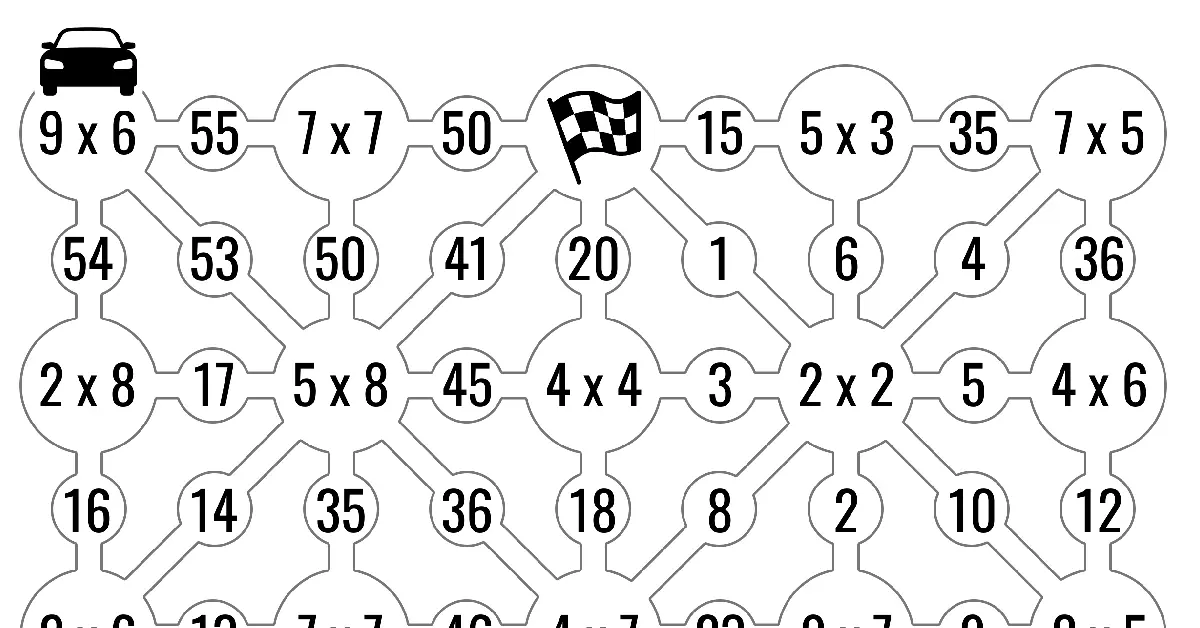
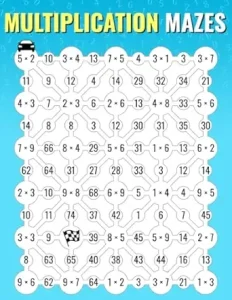
Your child begins at the starting line of a winding racetrack. As they “drive” their pencil along the track, they immediately encounter a fork in the road. Sitting right in the middle of that fork is a multiplication problem—for example, “6 x 7.”
One path is labeled “42.” The other path is labeled “45.”
They have to mentally calculate the answer to choose the correct route to keep racing. If they choose 42, the track continues, winding around corners and leading them to the next equation.
But what if they choose 45? They will follow the path for a few inches before suddenly crashing into a brick wall dead-end! They have to throw their car in reverse (erase their line), go back to the fork, and take the correct path.
Hitting the Educational Sweet Spot
This book focuses explicitly on the 0-9 times tables.
Why 0-9? Because this is the absolute core foundation of the 3rd and 4th-grade math curriculum. If a child can master these specific facts with lightning speed, everything else—long multiplication, division, fractions, and area—becomes infinitely easier.
By tying these crucial facts to a thrilling race car theme, we tap into a child’s natural love for speed, mechanics, and progression. They will want to complete “just one more page” to see if they can navigate the track without hitting a single dead end.
Shift math practice into high gear and grab your copy on Amazon today!
How to Implement This at Home or in the Classroom
Having a great tool is only half the battle. Knowing exactly how to deploy it is what guarantees success. Here are some highly effective, low-stress ways to integrate this book into your routine.
Practical Tips for Parents
-
The Transition Activity: Kids are often overstimulated right after school. Instead of jumping straight into heavy homework, offer a race car maze. It is a screen-free, quiet activity that helps their brain shift gears into learning mode without the stress.
-
The Restaurant Savior: Keep a copy in your bag. When you are waiting for food at a restaurant, pull out the mazes instead of handing over a smartphone. It keeps them engaged and practicing facts without feeling like they are being punished with homework.
-
Road Trip Companion: The race car theme makes it incredibly fitting for car rides. Let them race their pencil while you drive the actual car. It turns travel time into highly productive learning time.
Practical Tips for Teachers
-
The Ultimate “Early Finisher”: We all have those students who blaze through their work in five minutes, followed by students who need twenty. Keep copies of these mazes in an easily accessible bin. When a student finishes early, they can grab a maze. It is dead-silent, completely independent, and highly engaging.
-
Low-Prep Math Centers: Setting up centers can take hours of laminating and cutting. Skip the hassle. Tear out a few pages, slide them into clear dry-erase sleeves, and throw some whiteboard markers in a basket. Boom. You instantly have one of the most effective 3rd grade multiplication worksheets centers in your classroom, requiring zero prep.
Frequently Asked Questions
When it comes to navigating fact fluency, parents and educators have a lot of common concerns. Let’s tackle some of the most frequently asked questions to help you guide your child to success.
What is the easiest way to memorize multiplication facts?
The absolute easiest way is to combine conceptual understanding with gamified repetition.
First, ensure your child understands what multiplication actually is (e.g., that 3 x 4 means three groups of four). Once they have that foundation, abandon the rote drills. Use visual aids, skip-counting songs, and, most importantly, gamified tools like math mazes. The brain easily retains information when it is attached to a fun, low-stress activity. Consistency is key. Five to ten minutes of playful practice daily is far more effective than an hour of agonizing flashcard drills on a Sunday night.
At what age should a child know their times tables?
Generally, educational standards expect children to be introduced to the concept of multiplication in 2nd grade (around age 7 to 8).
However, the expectation for actual fluency and memorization usually hits hard in 3rd grade (around age 8 to 9). By the time a child enters 4th grade (age 9 to 10), they are expected to know their 0-9 or 0-12 facts thoroughly. This is because 4th-grade math introduces complex multi-digit multiplication and long division, which are incredibly frustrating if the basic facts are not already automatic.
How do you practice multiplication facts screen-free?
Screen-free practice is vital for reducing eye strain and improving deep focus.
You can practice using physical manipulatives like Lego bricks to build arrays. You can play traditional card games like “Multiplication War” (where two players flip a playing card, and the first to multiply them together keeps the cards). You can bake together and multiply recipe ingredients. And, of course, utilizing physical, interactive paper activities like race car math mazes provides exceptional screen-free practice that feels just as engaging as a video game.
Wrapping It Up
Math practice simply does not have to be a daily battleground. You do not have to settle for the tears, the frustration, and the exhaustion that comes with traditional drill methods.
By changing the format, we change the feeling. When we give kids a tool that empowers them to self-correct, engages their spatial reasoning, and wraps learning in a thrilling game, we unlock their true potential. They get to build their confidence one successful turn at a time.
Are you ready to permanently ditch the flashcards and bring the fun back to the kitchen table? Shift math practice into high gear and grab your copy of the Race Car Multiplication Maze Book on Amazon today!