
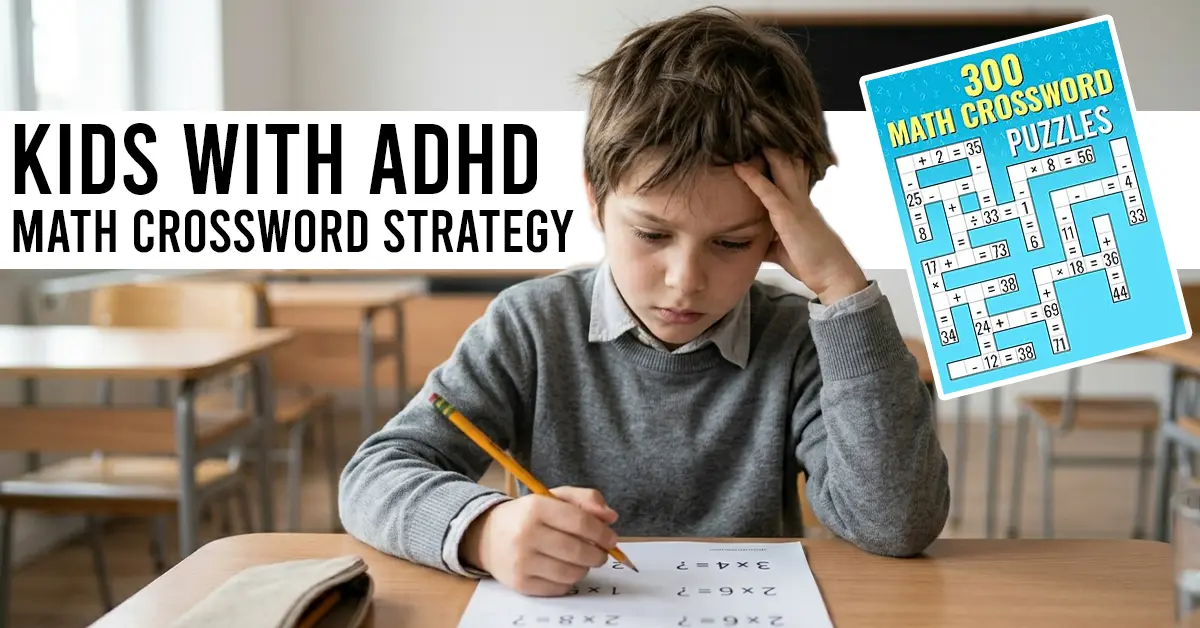
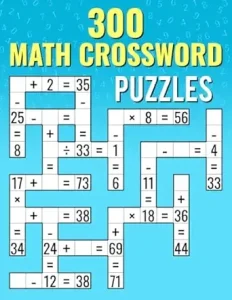
TL;DR: Teaching math to kids with ADHD requires bypassing working memory deficits and dopamine drops. The math crossword strategy solves this by transforming standard arithmetic into an intersecting, gamified math grid puzzle. By capping calculations at two digits (maximum 99) and using a self-correcting layout, it eliminates math anxiety and provides instant, stress-free feedback. Grab your 300 Math CrossWord Puzzles now.
The ADHD Math Battleground
The scene is likely familiar to you. A crumpled worksheet sits on the kitchen table. The eraser shavings look like tiny mountains of defeat. Your child stares at a page of thirty identical arithmetic problems, their eyes glazed over, or worse, filled with tears.
You offer encouragement, but it triggers a meltdown. Doors slam. Pencils fly. You are left feeling utterly exhausted, wondering why simple subtraction feels like scaling Mount Everest.
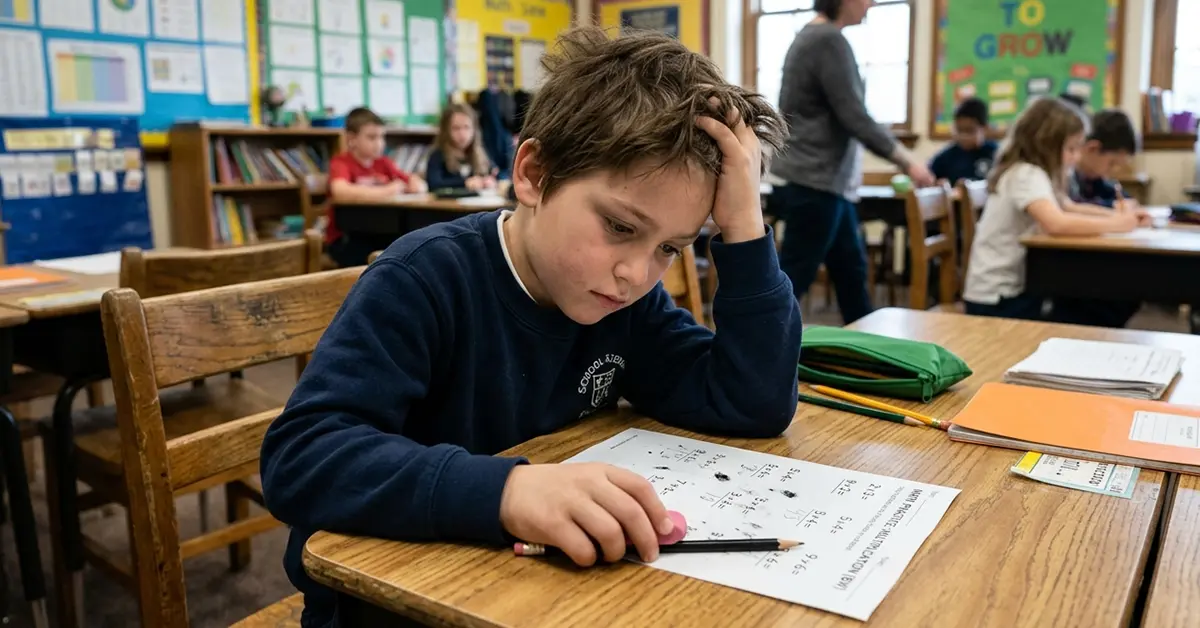
This is the daily reality of the ADHD math battleground. It is not a behavioral issue. It is not laziness, nor is it a lack of intelligence.
The issue lies in the design of standard curriculum. Traditional math delivery directly clashes with the mechanics of the neurodivergent brain.
The Dopamine Deficit
The ADHD brain operates on an interest-based nervous system. It craves dopamine, the neurotransmitter responsible for motivation and engagement.
Standard math worksheets do not provide dopamine. They look like a monotonous wall of text. To an ADHD child, looking at thirty repetitive problems feels like mental torture. Their brain actively rejects the task to protect itself from extreme under-stimulation.
The Working Memory Wall
Working memory is the brain’s mental sticky note. It allows us to hold information in our minds while manipulating it.
Kids with ADHD often have a significantly limited working memory capacity. Math requires holding numbers, remembering operational signs, and tracking steps simultaneously. When that mental sticky note runs out of space, the cognitive system crashes.
The result is instant overwhelm. To change the outcome, we must change our approach. We need a tactical shift that works with their unique brain chemistry.
Why Traditional Teaching Fails the Neurodivergent Brain
Most standard math instruction relies heavily on rote memorization and long-form worksheets. We use flashcards to drill facts. We assign pages of multi-step long division.
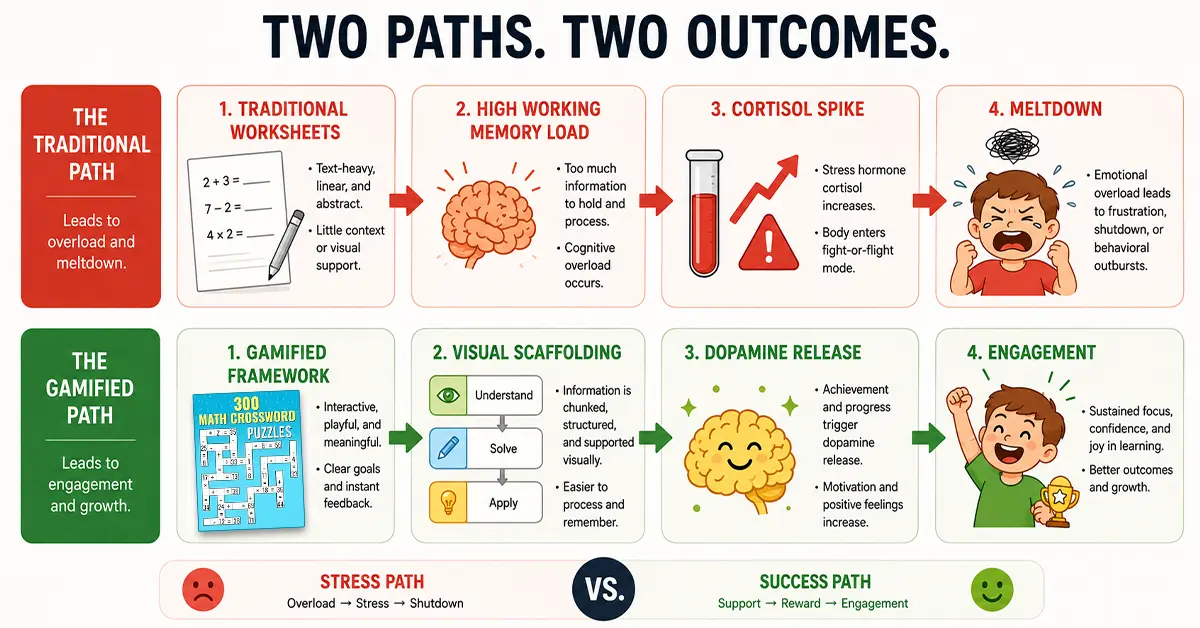
For a neurodivergent learner, this method triggers severe math anxiety. Flashcards introduce time pressure, which floods the brain with cortisol. When cortisol spikes, the prefrontal cortex shuts down, paralyzing the very area needed for mathematical thinking.
The Heavy Toll of Cognitive Load
Consider what happens during a standard multi-step math problem. A child must:
- Identify the operation symbol.
- Recall the specific mathematical rule.
- Hold carrying digits in their mind.
- Write down the partial answer in alignment.
When teaching math to kids with ADHD, forcing them to manage this high cognitive load without visual support leads to failure. They lose their place, forget what step they are on, and give up.
The Need for Visual Scaffolding
Neurodivergent learners require physical frameworks to anchor their thinking. They need to see how numbers connect.
Without visual structure, numbers remain abstract concepts floating in space. Traditional worksheets lack this structure, offering nothing for the visual-spatial brain to grip.
We must gamify the experience. Gamification does not mean adding flashing lights or digital screens. Real gamification means changing the structural mechanics of the task itself to make it inherently engaging.
Enter the Math Crossword Strategy
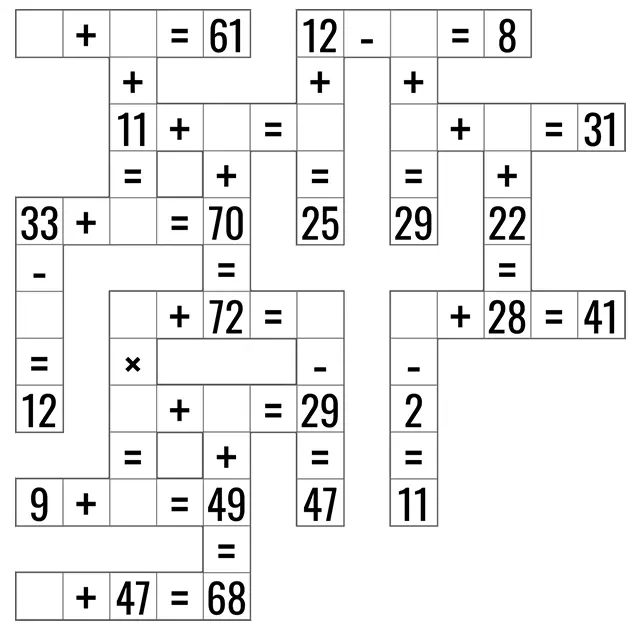
To break the cycle of homework battles, we use the math crossword strategy. This approach replaces isolated, vertical math columns with a connected puzzle framework.
Instead of solving individual problems in a vacuum, the child interacts with a fill-in-the-blank math crossword. Equations flow across and down, weaving into one another.
This structural shift completely changes how the neurodivergent brain perceives the task. The shift relies on clear psychological triggers.
The Power of the Mystery
Human brains naturally seek closure. In psychology, this is known as the Zeigarnik effect. A brain experiences cognitive tension when looking at an incomplete puzzle, creating a drive to finish it.
A standard worksheet offers no mystery. It is just a list of tasks to complete.
A math grid puzzle, however, presents an unsolved mystery. The empty boxes act as a challenge, shifting the child’s mindset from a passive chore to an active quest.
Activating the Dopamine Loop
Each time a child fills in a box that satisfies both a horizontal and a vertical equation, their brain receives a small hit of satisfaction.
This creates a positive dopamine loop. Instead of experiencing fatigue as they progress, the child gains momentum. The further they get into the puzzle, the easier it becomes to stay focused.
How the Intersecting Math Grid Puzzle Works
The mechanics of a fill-in-the-blank math crossword are simple yet highly effective. It functions exactly like a word crossword puzzle, but uses numbers and operational signs instead of letters and clues.
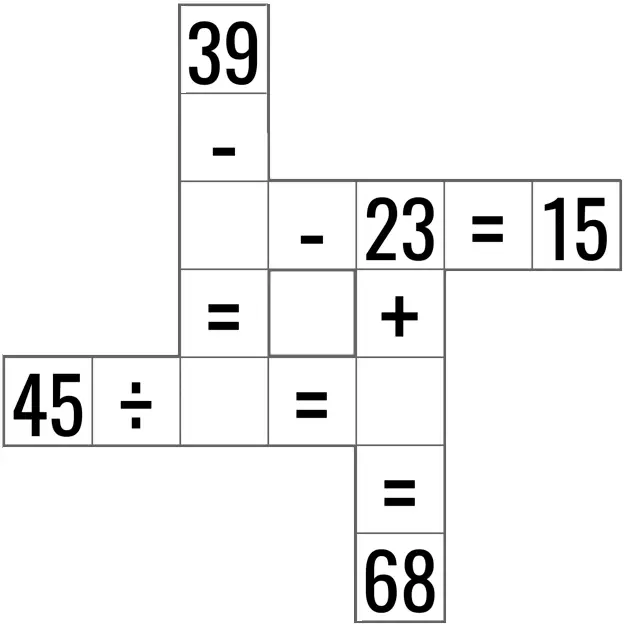
Equations intersect throughout the entire grid. A single blank box might represent the answer to a horizontal addition problem, while simultaneously serving as the starting number for a vertical division problem.
The Strategy Behind the 99-Cap
A key feature of this specific strategy is the operational limit: the maximum number used anywhere in the puzzle is 99.
By capping the math strictly at two digits, we protect the child from cognitive fatigue. They do not have to struggle with long, multi-step algorithms that exhaust their working memory.
Instead, the focus stays on operational fluency, mental math, and pattern recognition. It allows them to practice core operations without getting bogged down in tedious calculations.
The Self-Correction Miracle
The most impactful benefit of the intersecting grid is its ability to self-correct.
When a child solves a traditional math worksheet and gets an answer wrong, that error remains hidden until a parent or teacher grades it. This creates an uncomfortable emotional moment where the adult must say, “You’re wrong.” For an ADHD child with high rejection sensitivity, this can trigger a major meltdown.
The math crossword strategy removes the adult from the role of corrector. The grid itself acts as the teacher.
- Immediate Feedback: If a child calculates a horizontal equation incorrectly, that incorrect number will cascade down.
- Logical Discovery: When they try to solve the intersecting vertical equation, the math simply will not work out.
- Gamified Correction: The child instantly realizes an error was made somewhere along the line.
They become a detective, tracing their steps back to find the broken link. The emotional sting of correction disappears, replaced by a self-directed puzzle-solving process.
Step-by-Step Guide to Implementing the Strategy
Introducing ADHD math games and crossword grids requires a intentional approach. You cannot simply drop a puzzle in front of a frustrated child and expect immediate success. Follow this guide to build a confident, independent learner.
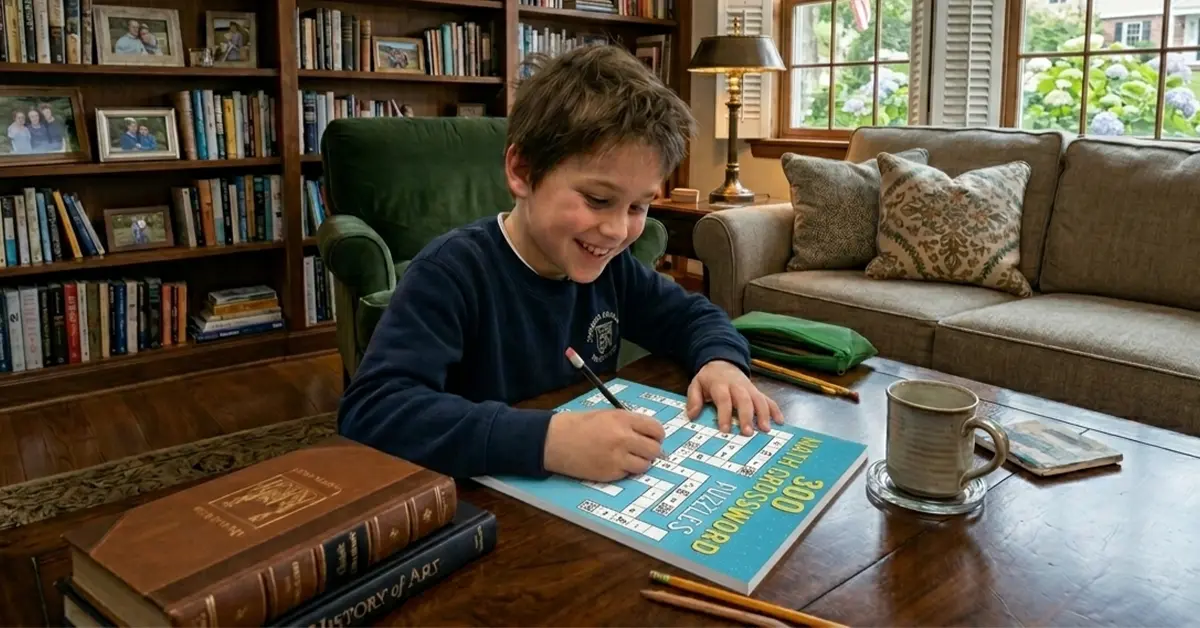
Step 1: Ditch the Timer
Time pressure is the enemy of the ADHD brain. It triggers anxiety and overrides logical thinking. When introducing the math crossword strategy, explicitly tell your child there is no time limit. The goal is discovery and pattern finding, not speed.
Step 2: Hunt for the Anchor Points
Do not force your child to work from top-left to bottom-right. That rigid approach kills engagement. Instead, have them scan the entire grid for the easiest entry points.
Look for equations that already have two numbers filled in. Finding these low-hanging fruit anchors builds initial confidence and opens up intersecting pathways across the page.
Step 3: Utilize Visual Scratch Paper
Even with numbers capped at 99, mental math can sometimes clutter an ADHD working memory. Keep a piece of blank scratch paper nearby.
Encourage them to doodle, draw tally marks, or write out two-digit vertical calculations if needed. The scratch paper protects their mental sticky note, while the grid maintains the macro-structure of the puzzle.
Step 4: Celebrate the “Click”
Pay attention to the moment the grid aligns. When a difficult intersection works out perfectly, celebrate it. Point out how their logic solved the puzzle. This reinforces the dopamine reward loop, making them eager to start the next grid.
Answering the Big Questions
How do you make math fun for a child with ADHD?
Making math fun for an ADHD learner requires shifting from passive consumption to active engagement. Avoid repetitive drill sheets. Introduce puzzle mechanics, hidden codes, or an intersecting math grid puzzle that transforms numbers into clues. When math feels like a mystery to solve rather than a chore to complete, engagement follows naturally.
Why do kids with ADHD struggle with traditional math worksheets?
Traditional worksheets demand sustained attention on monotonous, visually overwhelming layouts. They place a high burden on working memory by forcing kids to track multiple abstract steps without structural support. This high cognitive load, combined with a lack of immediate feedback, often triggers anxiety and avoidance behavior.
What are the best self-correcting math tools for neurodivergent learners?
The best self-correcting tools are those that provide immediate feedback without adult intervention. A fill-in-the-blank math crossword is highly effective because intersecting equations stop an error from working vertically. Other excellent options include physical math manipulatives, balance scales, and digital gamified platforms that offer real-time adjustment.
From Homework Meltdowns to Math Wins
If your child struggles with math, remember that they are not broken. Their brain is simply wired differently. They do not need more hours of repetitive drills; they need a different framework to interact with numbers.
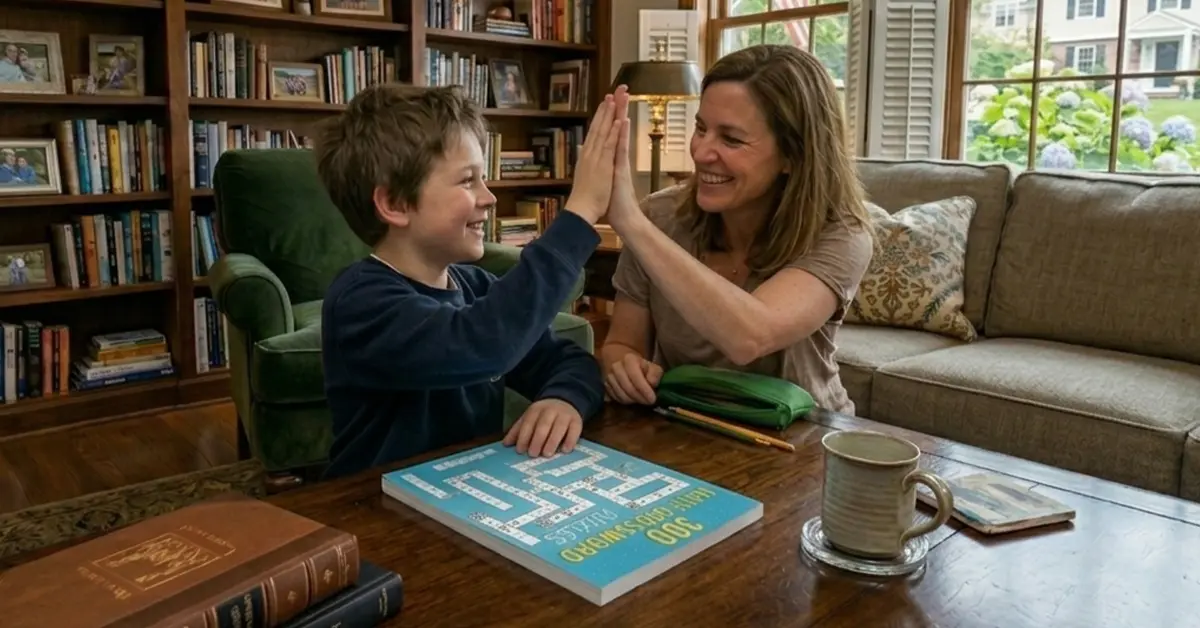
By pivoting to the math crossword strategy, you remove the emotional tension from the learning process. You replace tedious worksheets with an engaging puzzle framework that builds confidence through independent problem-solving.
Stop fighting the daily homework battles. Ditch the flashcards that cause tears, and introduce an intersecting grid puzzle today. Watch your child shift from frustration to focused pride as they make the numbers click into place.
What specific math topics cause the most frustration during your homework routine? Let me know in the comments below, and let’s map out a puzzle strategy to solve it!